
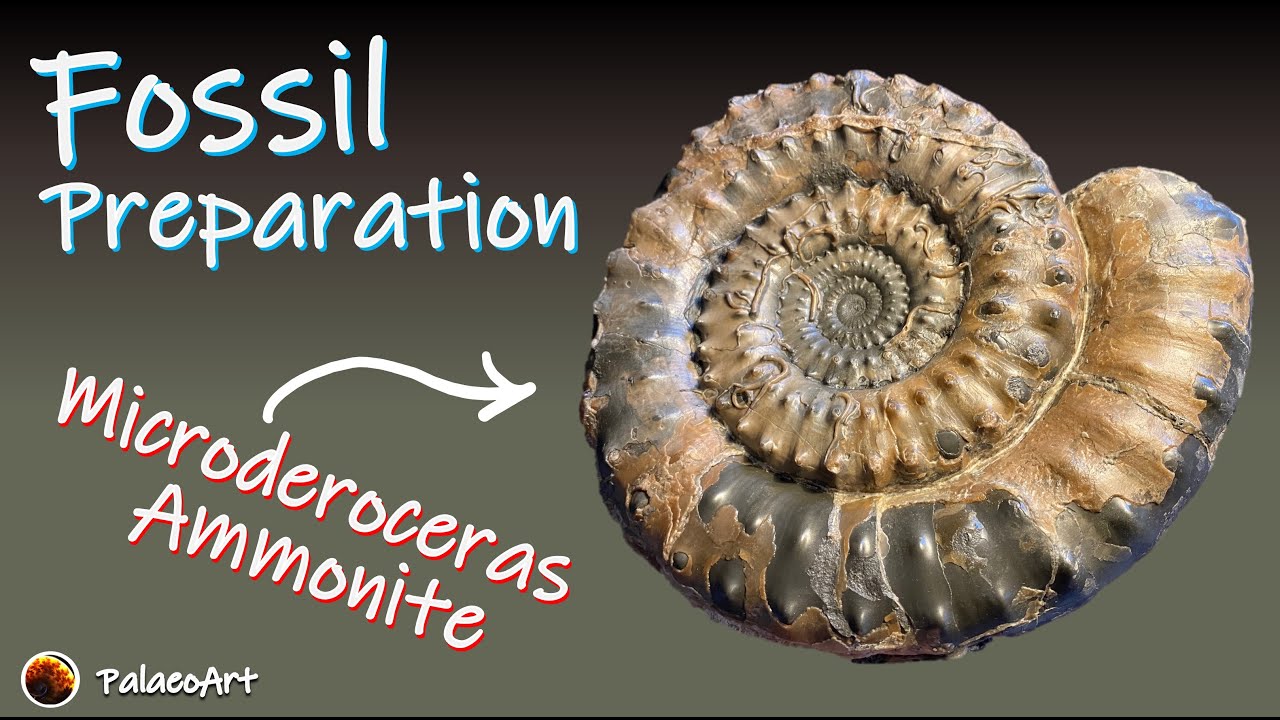
Getting Started with Ammonite Fossil Preparation
Ammonite fossils are the preserved shells of ancient, spiral-shelled marine animals that lived millions of years ago. Today, hobbyists and beginners prepare these fossils to better understand Earth’s history, create beautiful display pieces, and build personal collections. In this guide, you’ll learn the basics of safely cleaning, stabilizing, and highlighting an ammonite so its natural details really stand out. We’ll walk you through step-by-step instructions, with clearly marked spaces where you can add your own photos and videos as you work, making this a practical, hands-on resource you can return to again and again.
Step-by-Step Guide: Preparing an Ammonite Fossil
1. Initial Inspection and Identification
What to do: Place the ammonite and its surrounding rock (matrix) on a stable, well-lit work surface. Gently brush away loose dirt with a soft brush and visually inspect all sides. Look for the outline of the ammonite, visible chambers, cracks, or fragile areas. Compare the fossil’s shape and rib pattern with reference photos or a field guide to confirm it is an ammonite and to understand its orientation in the rock.
Why it matters: Careful inspection helps you decide which side to expose, where to remove rock, and how aggressive you can be with tools. Identifying cracks or weak spots early reduces the risk of breaking the fossil later.
Safety tips: Work on a clear, uncluttered bench to avoid knocking the fossil to the floor. Handle the specimen with two hands, especially if the matrix is heavy or fractured.
Insert image of the unprepared ammonite from multiple angles here.
2. Gathering Tools and Safety Equipment
What to do: Assemble your basic fossil prep kit before you start. Common tools include: soft brushes, wooden or plastic picks, steel needles, a small chisel and hammer, dental tools, and if available, an air scribe or air pen. Prepare safety gear: safety glasses or goggles, dust mask or respirator, and optionally ear protection and thin work gloves. Lay tools out in an organized way so you can reach them without crossing over the fossil.
Why it matters: Having the right tools and protection ready prevents rushed decisions and unsafe improvisation. Organized tools help you switch between coarse and fine work smoothly, reducing mistakes.
Safety tips: Always wear eye protection when using any hammer, chisel, or air tool. Use a dust mask whenever you create fine dust, especially indoors. Keep cords and air hoses routed away from your hands and the fossil to avoid sudden tugs.
Insert image of tool and safety gear layout here.
3. Cleaning Loose Debris and Surface Dirt
What to do: Begin by gently removing loose soil, sand, and small rock fragments. Use a soft paintbrush or toothbrush to sweep debris away from the fossil and off the work area. For slightly more stubborn dirt, lightly moisten a cotton swab or cloth with clean water and dab (do not scrub) the surface of the matrix, avoiding any visible shell material that might be water-sensitive.
Why it matters: Removing loose debris improves visibility so you can see fine details and cracks. It also prevents grit from scratching the fossil when you start mechanical preparation.
Safety tips: Avoid breathing in dust; brush debris away from your face and toward a tray or bin. If you use water, keep electrical tools and power strips well away from the damp area.
Insert short video showing gentle brushing and debris removal here.
4. Planning the Preparation Strategy
What to do: After cleaning, decide how much of the ammonite you want to expose and which side will be the display face. Mark potential cut or break lines on the matrix with a pencil or chalk. Identify areas where the fossil is already close to the surface and where the rock is thick. Choose which tools you will use first (for example, chisel for bulk removal, then needles for detail).
Why it matters: A clear plan prevents over-preparation, where too much matrix is removed and the fossil loses context or structural support. Planning also helps you work systematically from coarse to fine steps.
Safety tips: Before using any impact tools, ensure the fossil is supported on a padded but firm surface so vibrations do not cause hidden fractures to propagate.
Insert image with annotated arrows showing planned removal areas here.
5. Coarse Mechanical Preparation (Chisels and Larger Tools)
What to do: Start by removing excess matrix away from the ammonite using a small chisel and light hammer taps. Work from the outside toward the fossil, never striking directly on visible shell. Hold the chisel at a shallow angle so flakes of rock break away gradually. Rotate the specimen frequently to keep track of how close you are to the fossil surface.
Why it matters: Coarse removal quickly reduces the bulk of the rock, making later fine work easier and more controlled. Done carefully, it exposes more of the ammonite without damaging delicate features.
Safety tips: Always wear eye protection; small rock chips can fly unpredictably. Use controlled, light taps rather than heavy blows. Keep fingers behind the chisel edge to avoid accidental strikes.
Insert video showing careful chisel technique and controlled hammering here.
6. Fine Mechanical Preparation (Picks, Needles, and Air Pen)
What to do: Once you are close to the fossil surface, switch to finer tools. Use steel needles, dental picks, or a mechanical air pen to chip away thin layers of matrix. Work under good lighting and, if possible, with a magnifier. Approach the fossil at a low angle, removing rock in small flakes rather than gouging. Follow the natural curve and ribs of the ammonite, exposing a little at a time.
Why it matters: Fine mechanical work reveals the detailed structure of the ammonite while minimizing the risk of scratching or breaking the shell. It allows you to preserve subtle ornamentation like ribs, nodes, and sutures.
Safety tips: Air pens and scribes are noisy and can produce a lot of dust; wear ear protection and a dust mask. Secure air hoses to prevent sudden jerks. Take frequent breaks to reduce hand fatigue and maintain precise control.
Insert close-up video of air pen or needle work around the ammonite ribs here.
7. Optional Chemical Preparation
What to do: For some ammonites in limestone or calcareous matrix, controlled use of weak acids (such as diluted acetic acid) can help remove rock. Place the fossil in a chemical-resistant tray and apply the solution only to the matrix, not directly to the shell, using a brush or dropper. Allow the acid to react briefly, then rinse thoroughly with water and let the specimen dry completely before continuing mechanical work.
Why it matters: Chemical preparation can reach into tiny crevices and soften matrix that is difficult to remove mechanically, revealing fine details that might otherwise remain hidden.
Safety tips: Always wear chemical-resistant gloves, eye protection, and work in a well-ventilated area or outdoors. Clearly label all containers and never use food or drink containers for chemicals. Neutralize and dispose of used solutions according to local regulations.
8. Fine Detailing and Surface Cleaning
What to do: After the main matrix is removed, refine the surface. Use very fine needles, wooden or plastic picks, and soft brushes to clean between ribs and around the outer whorl. Gently scrape away any remaining thin film of matrix. If appropriate, use a low-pressure air blower or bulb to remove dust from crevices. Avoid over-cleaning; leave a thin layer of matrix where it supports fragile areas.
Why it matters: This stage brings out the aesthetic qualities of the ammonite, highlighting its spiral form and ornamentation. Careful detailing can dramatically improve the fossil’s appearance without compromising its integrity.
Safety tips: Work slowly and stop if you feel resistance; forcing tools can chip the shell. Use a dust mask if you are blowing or brushing fine particles into the air.
Insert macro image sequence showing before-and-after of detailed cleaning here.
9. Stabilization, Preservation, and Sealing
What to do: Inspect the fossil for cracks or loose fragments. If needed, apply a suitable consolidate (such as a diluted acrylic resin which is designed for fossils) with a fine brush to stabilize fragile areas. Once fully dry, you may apply a thin, reversible protective coating to the ammonite surface to enhance contrast and protect it from handling and moisture. Mount the fossil on a stand or in a display box that supports both the ammonite and its matrix.
Why it matters: Stabilization prevents future flaking or breakage, while a proper seal and mount help preserve the fossil for long-term study or display. Reversible products ensure that future preparators can undo your work if better methods become available.
Safety tips: Use consolidants and sealants in a well-ventilated area and avoid skin contact. Follow manufacturer instructions for mixing, application, and curing times. Store chemicals out of reach of children and away from heat sources.
Insert image of the fully prepared and mounted ammonite fossil here.
10. Documentation and Storage
What to do: Record key information about the fossil: location and date of collection, rock formation (if known), and details of the preparation methods used. Take clear photographs from multiple angles and note any repairs or consolidants applied. Store the ammonite in a stable environment, away from direct sunlight, extreme temperatures, and high humidity.
Why it matters: Good documentation increases the scientific and educational value of the fossil and helps future researchers or collectors understand its history. Proper storage conditions slow down deterioration and preserve the fossil for decades.
Safety tips: Use sturdy boxes or padded trays for storage to prevent accidental drops. Label containers clearly so the fossil is not mishandled or misplaced.
Insert image of labeled storage box and documentation sheet here.
Practical Tips & Troubleshooting for Ammonite Fossil Preparation
Successful ammonite preparation starts with understanding your matrix. For soft clay or shale, use wooden picks, soft brushes, and gentle dental tools; for medium limestone, use fine steel needles and low-pressure air scribes; for very hard matrix, consider carbide-tipped tools and, if available, a micro-sandblaster. Always test tools on a hidden area first to see how the matrix and fossil respond before committing to a full approach.
Fragile matrix can crumble around the ammonite. To avoid this, work from the outside in, removing small amounts at a time and supporting undercut areas with your fingers or soft foam. If the matrix begins to flake, consolidate it with a thin, reversible adhesive (such as diluted Paraloid B-72) applied with a fine brush, then allow it to dry fully before continuing. This stabilizes the surface and reduces the risk of sudden breakage.
Cracks in the fossil itself are common, especially in older or weathered specimens. Inspect the ammonite under good light before you start and mark any visible fractures. Where necessary, inject a small amount of consolidant or thin cyanoacrylate glue into the crack using a fine needle, wiping away any excess immediately. For larger breaks, dry-fit the pieces first, then glue and clamp gently with elastic bands or soft padding to avoid new damage.
Over-cleaning is one of the most frequent mistakes. It is tempting to chase every last grain of matrix, but removing too much can erase natural textures and fine shell details. Decide in advance how much matrix you want to leave for contrast and stop once the key features—whorls, ribs, and sutures—are clearly visible. When in doubt, leave a little extra matrix; you can always remove more later, but you can never put it back once it is gone.
Tool marks can permanently scar the fossil surface. To minimize them, keep tool tips sharp, work at a shallow angle, and use light, controlled strokes rather than heavy pressure. Switch to softer tools—wooden skewers, bamboo sticks, or plastic picks—when you get close to the shell. For final cleaning, use soft brushes, toothpicks, and, if appropriate, very fine abrasive powders under magnification. If you do create a small scratch, you can sometimes disguise it by gently blending the surrounding matrix or leaving a thin film of matrix over the mark.
Dust and safety issues are easy to underestimate. Fossil preparation can generate fine mineral dust that is harmful if inhaled. Always work in a well-ventilated area, use a dust mask or respirator rated for fine particles, and consider a small extraction fan or vacuum with a HEPA filter. Wear safety glasses to protect your eyes from flying chips, and use hearing protection if you rely on noisy air tools. Keep your workspace tidy so tools do not roll or fall onto your specimen.
Working slowly and patiently is essential. Plan short sessions rather than long, rushed marathons. Take regular breaks to rest your hands and reassess the fossil from different angles under fresh light. Use magnification—such as a head loupe or microscope—when you approach delicate sutures or thin shell layers. If you feel frustrated or tempted to force a stubborn area, stop and return later with a calmer mindset; impatience is a major cause of accidental damage.
Knowing when to stop is a skill in itself. A good rule is to pause whenever you reveal a new structural feature—such as a change in shell thickness or a new whorl—and decide whether further cleaning will genuinely improve the display. Many of the most attractive ammonites retain some matrix for contrast and stability. Once the fossil reads clearly from a normal viewing distance and the overall shape is well defined, consider the piece finished rather than chasing microscopic perfection.
Close-up images or short videos can be invaluable learning tools. Capture before-and-after shots of tricky areas, such as sutures, ribs, and repaired cracks, to compare good versus bad preparation results. Show side-by-side examples of over-cleaned versus well-balanced specimens, and record short clips demonstrating correct tool angles, pressure, and motion. Highlight both successes and mistakes so you and others can see exactly what to aim for—and what to avoid—on future projects.
With the right tools, patience, and a careful eye, even a rough ammonite can become a beautiful display piece that preserves both scientific detail and natural character.
Start revealing your ammonite’s hidden beauty today.